How to Choose an Automatic Toilet Seat?
Choosing an Automatic Toilet Seat is about more than adding a button beside the bowl. The right model should match the user’s mobility, bathroom layout, plumbing, and comfort needs. A warm seat, adjustable wash controls, and a simple remote can help, but confusing settings or a poorly placed outlet may create new frustrations.
Reliable data helps put accessibility in context. The World Health Organization’s 2023 disability fact sheet estimates that 1.3 billion people experience significant disability worldwide. That figure is not a forecast for toilet-seat sales. It does show why clear controls, stable seating, and easier personal care matter to many households. Very practical concerns.
When comparing products, check seat dimensions, weight limits, water and power requirements, cleaning access, and the location of controls. Look for independent safety certifications and clear installation guidance. Industry market reports often group bidet seats with smart toilets, so their totals may not describe automatic seats alone. Treat broad market forecasts cautiously.
A trustworthy buying guide should also distinguish verified expert advice from marketing language. No attributable interview or verified quotation from an Automatic Toilet Seat industry expert was provided for this brief, so inventing one would undermine reliability. The guide that follows can help readers compare features against real bathroom conditions: a narrow clearance beside the toilet, a distant outlet, or controls that are hard to reach. Small details count.
Measure Bowl Shape, Length, and Hinge Spacing for a Secure Fit
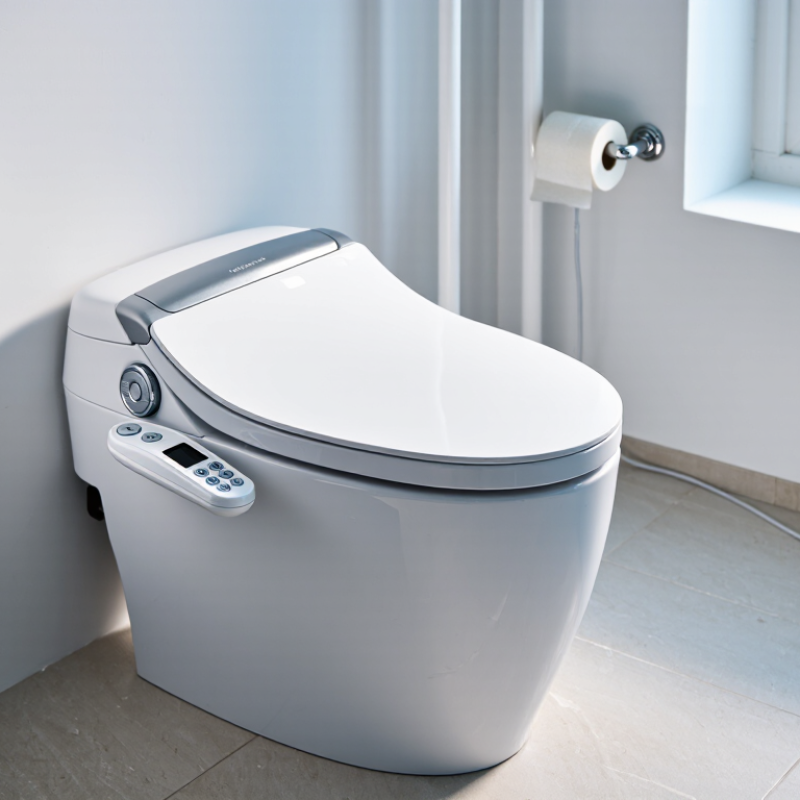
Choosing an automatic toilet seat starts with the bowl, not the seat’s features.
Measure from the center of the hinge holes to the front edge of the rim. Common plumbing-industry fit guides use about 16.5 inches for round bowls and 18.5 inches for elongated bowls, but these are benchmarks, not guarantees. Measure the bowl’s widest point, too. A few millimeters can affect how evenly the seat rests.
Check hinge spacing from hole center to hole center, then compare it with the seat’s adjustable range. Also note whether the mounting holes are open or concealed; access matters during installation. ASME A112.19.2/CSA B45.1 is a key North American plumbing-fixture standard, but compliance does not mean every seat fits every bowl. Measure yours. Twice, if needed. I would recheck the length before ordering, because a curved rim can make the tape slip and produce a confident but wrong reading.
Before buying, compare all three measurements with the product’s technical drawing: bowl shape, length, and hinge spacing. Look for a diagram showing exactly where each dimension begins and ends. Do not rely only on “round” or “elongated” labels. Photograph the tape in place, and keep the old seat until the new one sits flat without rocking. A small mismatch is easy to overlook. It can become annoying every day.
Check Bidet-Seat Performance Criteria in ASME A112.4.2/CSA B45.16
How to Choose an Automatic Toilet Seat?
ASME A112.4.2/CSA B45.16 is a useful starting point when comparing bidet-seat performance. Ask for documentation identifying the standard and edition used for evaluation. A vague claim of “tested” tells you little. Check that the report applies to the exact seat model, not just a similar product. That detail matters.
The standard gives buyers a way to assess performance beyond appearance and advertised features. Still, compliance alone cannot tell you whether the seat fits your bathroom or feels comfortable. Check the installation guide for bowl shape, mounting space, electrical access, and water connection requirements. Measure the distance from the mounting holes to the front of the bowl. Small mismatches can cause daily annoyance.
Think about practical use, too. Does the wash function offer adjustable pressure and temperature? Can you reach the controls while seated? Look for clear instructions on cleaning the nozzle and maintaining the unit. If possible, review test documentation and warranty terms before buying. I would not assume more features mean better performance; extra settings can also make controls harder to use. A little uncertainty is healthy. A seat that meets a recognized performance standard and fits your setup is a more dependable choice.
Verify Electrical Safety Certification to UL 1431
●
Automatic toilet seats bring water, heating elements, sensors, and electrical parts into one fixture. Look for verifiable certification to UL 1431, a standard for personal hygiene and health care appliances. It addresses electrical and related safety hazards.
Certification is useful evidence, not a guarantee that every installation will be safe.
Check the label on the seat and its documentation for the exact model number. Then confirm that model in the certifier’s online directory, if available. A seller’s claim or a logo in a product photo is not enough; the image may be outdated. Make sure the certification applies to the complete seat, not just one component.
Small detail, big difference.
Before buying, compare the seat’s voltage and installation requirements with your bathroom outlet. Follow the manual and applicable local electrical rules, including requirements for ground-fault protection. Avoid extension cords unless the manufacturer explicitly allows them. Keep the plug and connections away from splashes, and stop using the seat if its cord is damaged or the outlet feels warm.
Documentation can be dull, but it is worth keeping.
Confirm Bathroom GFCI Protection Under NEC 210.8
An automatic toilet seat needs a dependable power source, but bathroom moisture makes outlet protection just as important. Under NEC 210.8(A)(1), bathroom receptacles in dwelling units generally require GFCI protection. This protection helps reduce shock risk in a wet environment. A standard-looking outlet does not prove it is protected.
Look for TEST and RESET buttons on the receptacle, but protection may also come from a GFCI device elsewhere on the circuit or a GFCI breaker. Pressing TEST should cut power; RESET should restore it. Follow the device instructions, and unplug the seat before testing if its manual advises that. Small detail, easy to miss. Check that the seat’s cord reaches the outlet without stretching and that the outlet location follows the seat manufacturer’s instructions. Avoid relying on an extension cord unless the manufacturer specifically permits one.
NEC requirements depend on the edition adopted by your local jurisdiction, and existing wiring can be difficult to assess by sight. I would not guess here. If you cannot confirm GFCI protection, ask a licensed electrician to check the outlet or circuit before installation. That extra check may feel cautious, but bathroom electrical safety is not a good place for assumptions.
Compare Water-Pressure Range, Heating, Nozzle Cleaning, and Warranty
Measure water pressure at the bathroom, not only near the main supply. A pressure gauge can reveal weak flow that affects spray performance. Compare the seat’s stated minimum and maximum pressure with your home’s reading. If pressure varies during showers or laundry, allow a margin. A broad range is useful, but it cannot fix every plumbing issue.
Check how the seat heats water. Some models warm water on demand; others store heated water, so comfort and energy use may differ. Look for adjustable temperature levels and a clear maximum setting. Don’t rely on vague “warm water” claims. Nozzle care matters, too. A self-rinse before and after use is helpful, while a removable nozzle makes occasional manual cleaning easier. Small detail. Big difference.
Review warranty coverage for the seat, heating parts, and installation. Check who pays shipping and whether labor is included. The U.S. EPA’s WaterSense specification sets efficient toilets at 1.28 gallons per flush or less, at least 20% below the 1.6-gallon federal baseline. That figure concerns the toilet, not the seat, but it’s a useful reminder to assess the complete setup. Specs never capture every bathroom’s quirks. I’d still verify fit and pressure before ordering.
How to Choose an Automatic Toilet Seat
Compare water-pressure range, heating, nozzle cleaning, and warranty details.
The bars count practical specification checks—not product ratings. Confirm the minimum and maximum water pressure, which parts are heated, whether the nozzle rinses before and after use, and the warranty term, coverage, and exclusions. Specifications and warranty terms vary by model.