2026 How to Choose the Best Smart Toilet for Global Buyers?
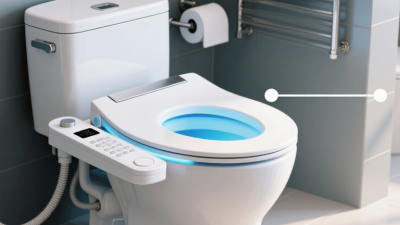
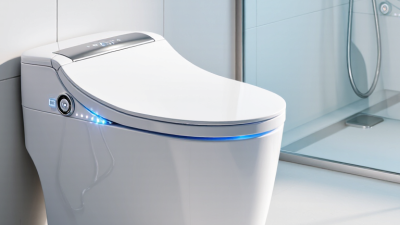
Choosing the right Smart Toilet in 2026 requires more than comparing touchscreens, heated seats, or promotional prices. Global buyers must examine performance, safety, installation, maintenance, and long-term support. A premium model may offer warm-water washing, automatic flushing, odor control, night lighting, and adjustable drying. Yet advanced features become less valuable when local technicians cannot repair them.
Details matter. Check voltage compatibility, water pressure requirements, drainage design, and bathroom dimensions before ordering. Certification requirements differ across markets, so buyers should verify recognized safety and plumbing approvals in their destination country. A reliable supplier should provide clear manuals, spare-part availability, warranty terms, and responsive technical assistance. Product claims should also be compared with independent reviews, installer feedback, and documented test information.
Preferences differ. Some households prioritize hygiene and accessibility, while others need simple controls for older users. Families may value child settings, quiet flushing, and easy-to-clean surfaces. Commercial buyers may focus on durability, sensor reliability, and service contracts. This guide evaluates those practical priorities for homes, hotels, property developments, and retail projects worldwide.
Not every expensive model is better. That assumption fails. Even experienced buyers can overlook replacement filters, hidden installation costs, or regional after-sales limitations. A thoughtful decision balances comfort with reliability, compliance, water efficiency, and repairability. The best Smart Toilet is not merely the most intelligent model. It is the one that performs safely and consistently in its real environment.
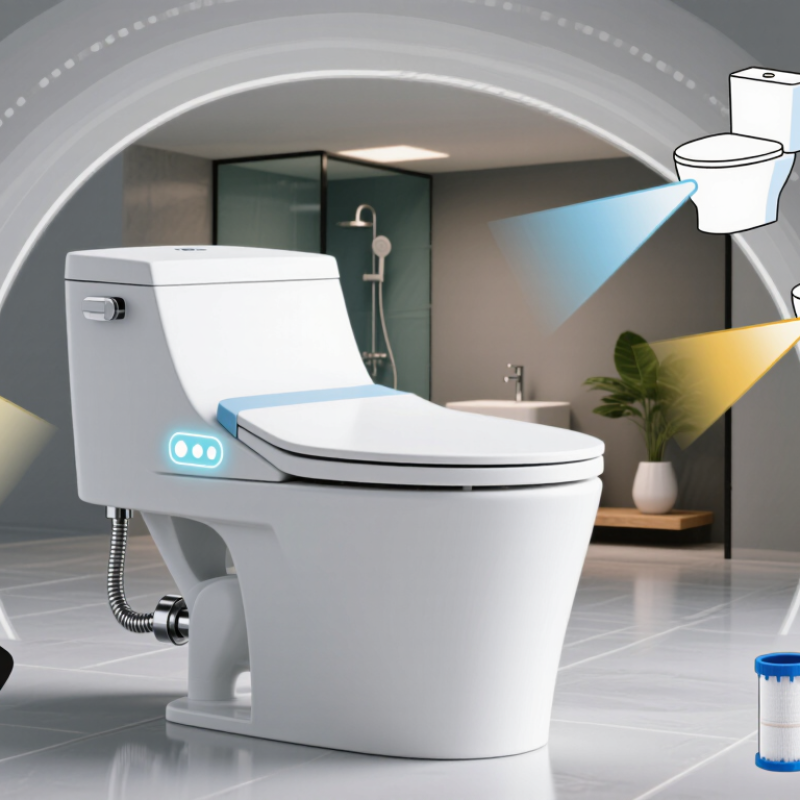
Define Buyer Needs: WHO/UNICEF Report 3.5 Billion Lacked Safe Sanitation in 2022
The WHO/UNICEF Joint Monitoring Programme reported that 3.5 billion people lacked safely managed sanitation in 2022.
This figure should shape smart toilet decisions. A connected seat cannot replace reliable toilets, clean water, drainage, or safe waste treatment. Global buyers must define the real need first. Is the product for a modern home, a water-limited area, or a facility serving many users?
Start with local conditions.
Check water pressure, electricity stability, pipe standards, bathroom size, and maintenance access. In some regions, unstable power makes heated seats or automatic flushing less useful. Manual controls may matter more than an app. Keep it simple. A practical evaluation should examine flush performance, water consumption, hygiene functions, emergency operation, and spare-part availability. These details often matter more than a bright display.
Safety deserves careful attention.
Look for clear electrical protection, washable surfaces, temperature limits, and dependable child settings. Ask whether local technicians can repair the unit without special tools. Certification claims should come from recognized testing bodies, not only marketing pages. I would not treat “smart” as proof of quality. Sometimes, it adds failure points. The best choice may be less impressive, but easier to clean, repair, and use every day.
Compare Flush Efficiency: EPA WaterSense Limits Toilets to 1.28 gpf (4.8 L)
Choosing the best smart toilet starts with flush efficiency, not a touchscreen or heated seat. EPA WaterSense limits qualifying toilets to 1.28 gallons per flush, or 4.8 liters. That is 20% less water than the older 1.6-gallon standard. The difference seems small. It is not.
Toilets represented about 24% of indoor residential water use in the Water Research Foundation’s Residential End Uses of Water Study, Version 2. For global buyers, this makes flush performance a practical cost and sustainability issue. During product comparisons, check the certified flush volume, dual-flush average, and pressure requirements. A strong model should also pass independent bulk-removal testing, such as MaP performance testing, rather than relying only on attractive specifications.
Look beyond the label.
A lower flush volume can disappoint if the bowl needs repeated flushing. This wastes water and weakens the original benefit. I also check whether the toilet performs consistently with low household pressure, mineral buildup, or limited tank capacity. Those details are easy to ignore. They matter in real bathrooms.
EPA WaterSense specifications provide a reliable U.S. benchmark, but global purchasers should verify local certification and plumbing compatibility. Some markets measure liters per flush, while others use different testing methods. Smart functions can improve comfort, yet they do not compensate for poor hydraulic design. The honest choice may be less glamorous: efficient, quiet, and dependable every day.
Verify Hygiene Features Against NSF/ANSI 41 and Applicable Health Standards
Choosing a smart toilet for global use requires more than checking spray settings and heated seats. Hygiene claims should be matched with recognized testing evidence, not attractive product images. NSF/ANSI 41 mainly addresses non-sewered waste-disposal systems and their treatment performance. It does not automatically certify every washing nozzle, seat surface, or electronic function.
Ask the supplier for the exact certificate, model number, testing scope, and issue date. The certificate should match the unit you plan to purchase. Check whether the system controls odor, handles waste safely, and maintains stable treatment conditions. Examine nozzle cleaning, drying airflow, removable parts, and surfaces around the bowl hinge. Small gaps can collect residue. They matter.
Applicable health standards may also cover water safety, backflow prevention, electrical protection, and materials contacting water. Requirements differ across countries and installation environments. A bathroom supplied by recycled water needs closer review than one using treated municipal water. Ask for laboratory reports from competent, independent testing bodies. Do not accept “medical grade” without a defined standard. That phrase is often too vague.
A useful inspection includes running several cleaning cycles and checking spray consistency. Look beneath the seat, not only at the display panel. Documentation can still be incomplete, and certificates may cover only one configuration. That is worth questioning. A reliable choice combines verified hygiene performance, clear maintenance instructions, and local compliance advice.
Check Electrical Safety, Water Protection, and IEC 60335 Compliance
For global buyers, a smart toilet is not only a bathroom fixture. It combines heating, pumps, sensors, water valves, and electronic controls near human contact. WHO and UNICEF’s 2023 Joint Monitoring Programme estimated that 3.5 billion people lacked safely managed sanitation in 2022. This highlights why dependable hygiene equipment needs careful technical review.
Check IEC 60335 compliance, not just a certificate logo. IEC 60335-1 covers general household appliance safety, while IEC 60335-2-84 addresses toilet appliances. Ask for test reports covering electric shock protection, leakage current, grounding, dielectric strength, and abnormal operation. The report should match the exact model. Similar-looking models are not enough.
Water protection needs equal attention. Confirm the enclosure’s IP rating under IEC 60529, especially around the seat hinges, control panel, and rear connections. A higher number does not automatically prove safe installation. Check hose connections, backflow protection, pressure limits, and drying performance. A 30 mA residual-current device is commonly used for additional protection, subject to local electrical rules. The bathroom may look dry. Internal condensation can still damage circuits. Buyers should also review operating temperature, water quality limits, replacement parts, and local service capability. A perfect checklist can still miss poor assembly or unclear instructions. That weakness deserves scrutiny.
Assess Installation, Spare Parts, Warranty, and Total Ownership Cost
Choosing a smart toilet for global use starts with installation, not appearance. Measure the rough-in distance, outlet position, water pressure, and available electrical supply. A model designed for one region may need a different plug or transformer elsewhere. Confirm whether the water inlet and drain connections match local plumbing. I once overlooked a narrow bathroom doorway. Delivery was easy; moving the unit inside was not.
Spare parts deserve equal attention. Ask for prices and availability of inlet valves, filters, seat sensors, remote controls, and heating components. Common parts should have clear identification numbers and practical shipping options. A warranty should explain coverage length, labor responsibility, return procedures, and exclusions. “Two years” sounds reassuring, but it may cover parts only. Keep the invoice and installation record. They may matter later. Technical manuals in a usable language also show how seriously the supplier supports buyers.
Calculate total ownership cost before comparing prices. Include freight, import charges, professional installation, electricity, filters, cleaning supplies, and possible repairs. A low purchase price can become expensive when one small part requires international shipping. Check energy-saving settings and estimated water use under normal household conditions. I recommend building a simple five-year spreadsheet. It will not predict every failure, and my own estimates are sometimes too optimistic. Still, it exposes costs that glossy product photos hide. A local technician’s opinion can also reveal whether maintenance is realistic in your area.